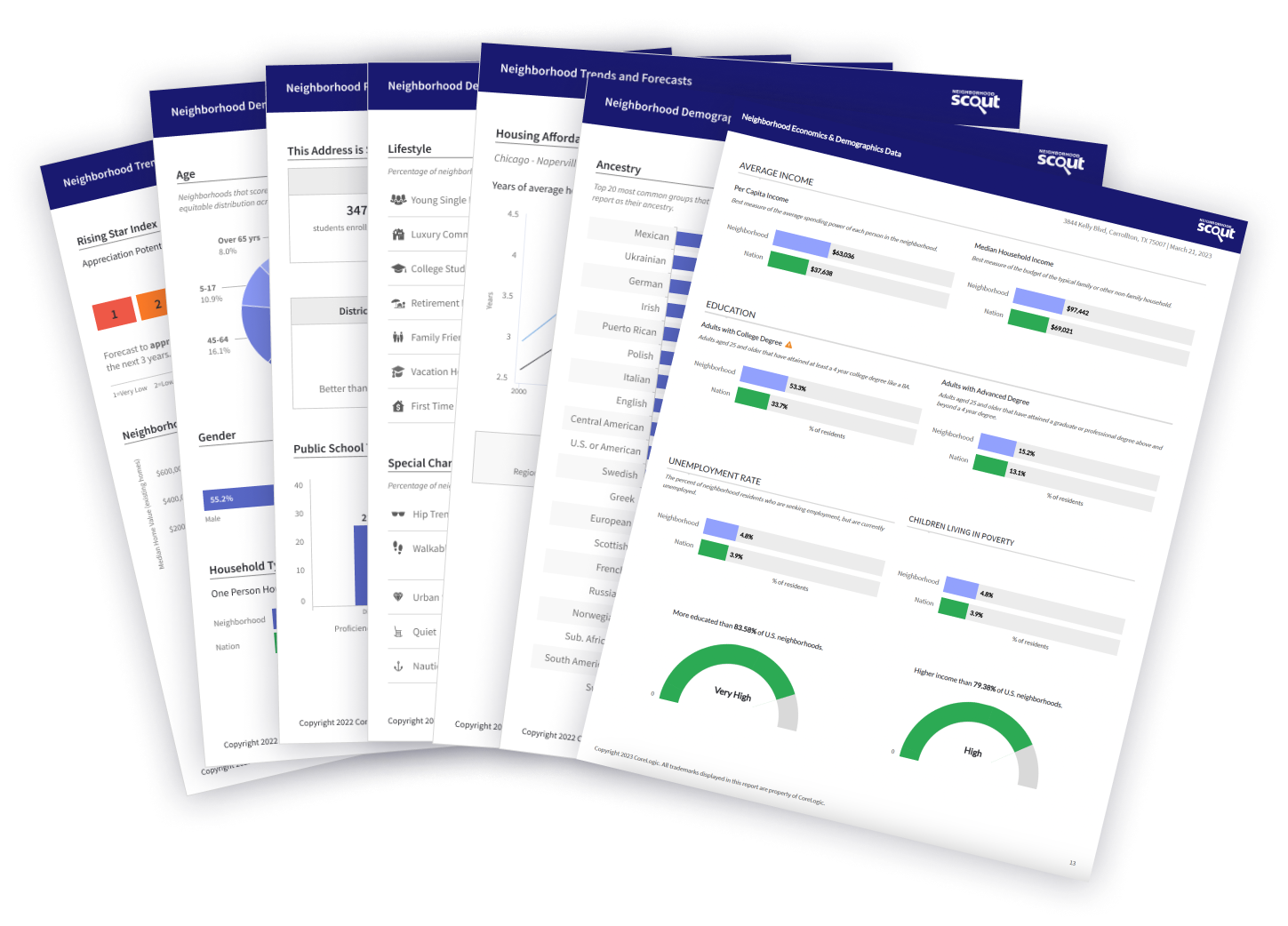
Marion North median real estate price is $348,073, which is more expensive than 78.5% of the neighborhoods in Iowa and 44.5% of the neighborhoods in the U.S.
The average rental price in Marion North is currently $1,677, based on NeighborhoodScout's exclusive analysis. The average rental cost in this neighborhood is higher than 92.0% of the neighborhoods in Iowa.
Marion North is a rural neighborhood (based on population density) located in Marion, Iowa.
Marion North real estate is primarily made up of medium sized (three or four bedroom) to large (four, five or more bedroom) single-family homes and townhomes. Most of the residential real estate is owner occupied. Many of the residences in the Marion North neighborhood are newer, built in 2000 or more recently. A number of residences were also built between 1970 and 1999.
In Marion North, the current vacancy rate is 0.0%, which is a lower rate of vacancies than 100.0% of all neighborhoods in the U.S. This means that the housing supply in Marion North is very tight compared to the demand for property here.
The way a neighborhood looks and feels when you walk or drive around it, from its setting, its buildings, and its flavor, can make all the difference. This neighborhood has some really cool things about the way it looks and feels as revealed by NeighborhoodScout's exclusive research. This might include anything from the housing stock to the types of households living here to how people get around.
Real estate in the Marion North neighborhood is almost exclusively owner-occupied. NeighborhoodScout's analysis reveals that this neighborhood has a higher rate of owner-occupied housing than is found in 95.9% of U.S. neighborhoods. If you are seeking to rent, this neighborhood may not have many options, but high rates of ownership often indicate stability in a neighborhood. With a real estate vacancy rate of only 0.0%, the Marion North neighborhood has a lower vacancy rate than 100.0% of U.S. neighborhoods, a very elite group. Such a low vacancy rate may indicate very strong real estate demand in the neighborhood combined with some impediments to increasing supply, such as zoning or existing density of development, among other potential reasons.
In addition, many people dream of living along a street lined with row houses or other attached homes. Such places do often have an abundance of charm. If you are one of these people, the Marion North neighborhood could be your paradise. With 33.2% of the homes and real estate here classified as rowhouses or other attached homes, this neighborhood brims with opportunity to find the right place for you. Only 2.7% of U.S. neighborhoods have more row houses than this neighborhood, making it one of the most interesting things about this special neighborhood.
Furthermore, homes built from 2000 through today make up a higher proportion of the Marion North neighborhood's real estate landscape than 96.2% of the neighborhoods in America. When you are driving around this neighborhood, you'll notice right away that it is one of the newest built of any, with the smell of fresh paint, and the look of young landscaping nearly everywhere you look. In fact, 73.6% of the residential real estate here is classified as newer.
Astoundingly, NeighborhoodScout's research reveals that this single neighborhood has a higher concentration of married couples living here than 96.2% of all U.S. neighborhoods. Whether they have school-aged children or not, married couples are the rule in the Marion North neighborhood. If you are a married couple, you may find many people here with a similar lifestyle, and perhaps common interests. But if you are single, you might not find many other singles here.
In addition, the Marion North neighborhood is considered a solid choice for executive lifestyles. NeighborhoodScout's analysis ranks it as better than 93.0% of Iowa neighborhoods for executive living, based on the wealthy, educated professionals, executives, and managers who choose to reside here, the spacious homes that are prominent features of the real estate in the neighborhood, and the high real estate appreciation rates found here relative to other neighborhoods in the state. In addition to being an excellent choice for highly educated executives, this neighborhood is also a very good choice for active retirees.
Did you know that the Marion North neighborhood has more Lebanese and Norwegian ancestry people living in it than nearly any neighborhood in America? It's true! In fact, 5.2% of this neighborhood's residents have Lebanese ancestry and 15.5% have Norwegian ancestry.
How wealthy a neighborhood is, from very wealthy, to middle income, to low income is very formative with regard to the personality and character of a neighborhood. Equally important is the rate of people, particularly children, who live below the federal poverty line. In some wealthy gated communities, the areas immediately surrounding can have high rates of childhood poverty, which indicates other social issues. NeighborhoodScout's analysis reveals both aspects of income and poverty for this neighborhood.
The neighbors in the Marion North neighborhood in Marion are upper-middle income, making it an above average income neighborhood. NeighborhoodScout's exclusive analysis reveals that this neighborhood has a higher income than 69.4% of the neighborhoods in America. In addition, 6.3% of the children seventeen and under living in this neighborhood are living below the federal poverty line, which is a lower rate of childhood poverty than is found in 60.1% of America's neighborhoods.
The old saying "you are what you eat" is true. But it is also true that you are what you do for a living. The types of occupations your neighbors have shape their character, and together as a group, their collective occupations shape the culture of a place.
In the Marion North neighborhood, 59.8% of the working population is employed in executive, management, and professional occupations. The second most important occupational group in this neighborhood is sales and service jobs, from major sales accounts, to working in fast food restaurants, with 18.0% of the residents employed. Other residents here are employed in manufacturing and laborer occupations (13.0%), and 9.1% in clerical, assistant, and tech support occupations.
The most common language spoken in the Marion North neighborhood is English, spoken by 98.9% of households.
Boston's Beacon Hill blue-blood streets, Brooklyn's Orthodox Jewish enclaves, Los Angeles' Persian neighborhoods. Each has its own culture derived primarily from the ancestries and culture of the residents who call these neighborhoods home. Likewise, each neighborhood in America has its own culture – some more unique than others – based on lifestyle, occupations, the types of households – and importantly – on the ethnicities and ancestries of the people who live in the neighborhood. Understanding where people came from, who their grandparents or great-grandparents were, can help you understand how a neighborhood is today.
In the Marion North neighborhood in Marion, IA, residents most commonly identify their ethnicity or ancestry as German (35.5%). There are also a number of people of Norwegian ancestry (15.5%), and residents who report Irish roots (15.3%), and some of the residents are also of English ancestry (11.8%), along with some Arab ancestry residents (5.4%), among others.
Even if your neighborhood is walkable, you may still have to drive to your place of work. Some neighborhoods are located where many can get to work in just a few minutes, while others are located such that most residents have a long and arduous commute. The greatest number of commuters in Marion North neighborhood spend between 15 and 30 minutes commuting one-way to work (38.8% of working residents), which is shorter than the time spent commuting to work for most Americans.
Here most residents (64.0%) drive alone in a private automobile to get to work. In addition, quite a number also carpool with coworkers, friends, or neighbors to get to work (6.5%) . In a neighborhood like this, as in most of the nation, many residents find owning a car useful for getting to work.